Science World Vancouver is the geodesic-dome science centre at the eastern end of False Creek — instantly recognisable as the silver-ball that anchors the Vancouver skyline at the end of the SkyTrain Expo Line. Built for Expo 86, the Buckminster Fuller-style dome has been Western Canada’s flagship hands-on science centre since 1989, and the largest OMNIMAX dome theatre in the world is housed inside the same sphere.
This 2026 visitor guide covers everything you need to plan a half-day or full-day visit: current ticket prices, hours, every gallery and the rotating feature exhibitions, the OMNIMAX schedule, the outdoor Ken Spencer Science Park, age-by-age advice for kids, and how Science World stacks up against other Vancouver family attractions.
Table of Contents
Science World Vancouver: Overview
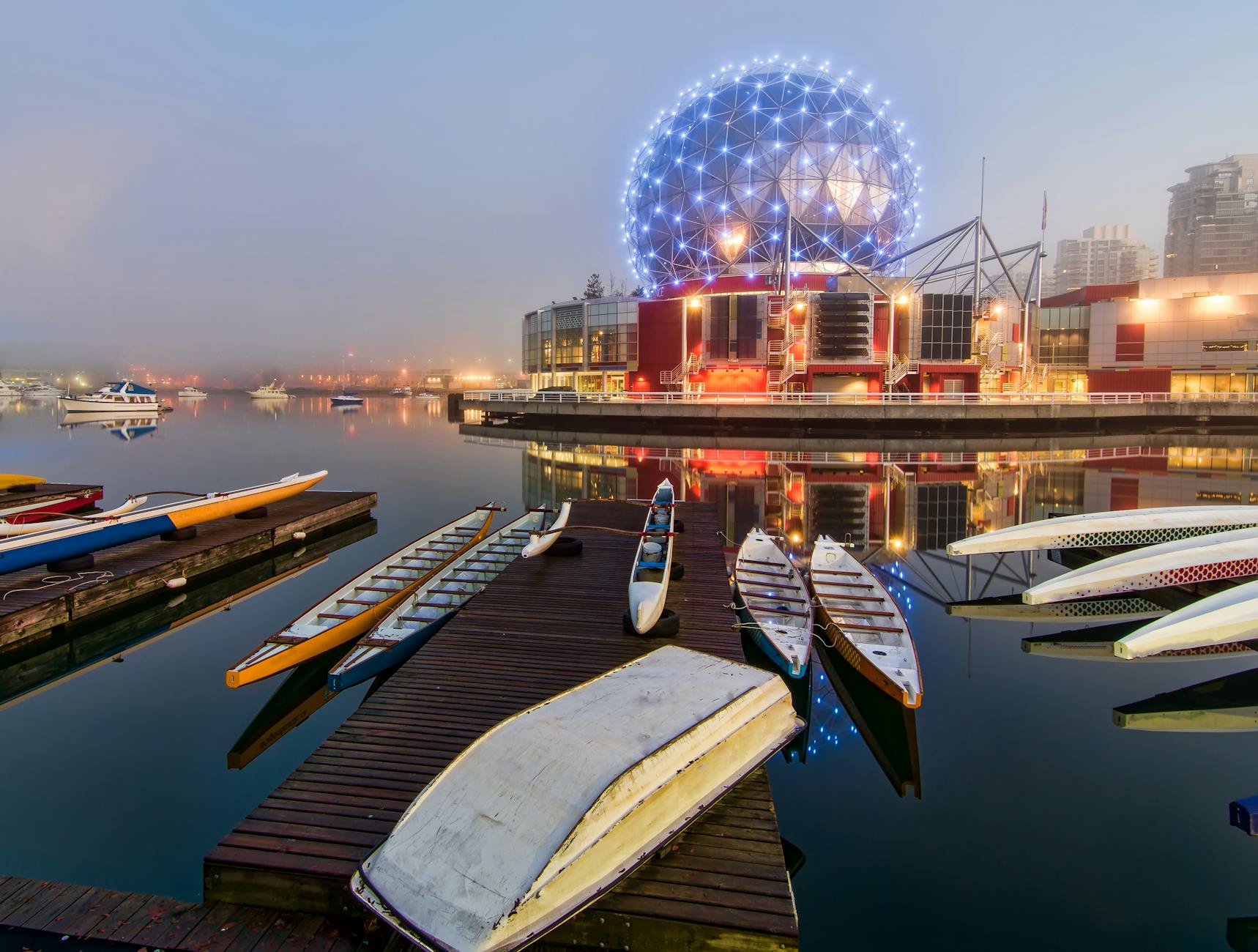
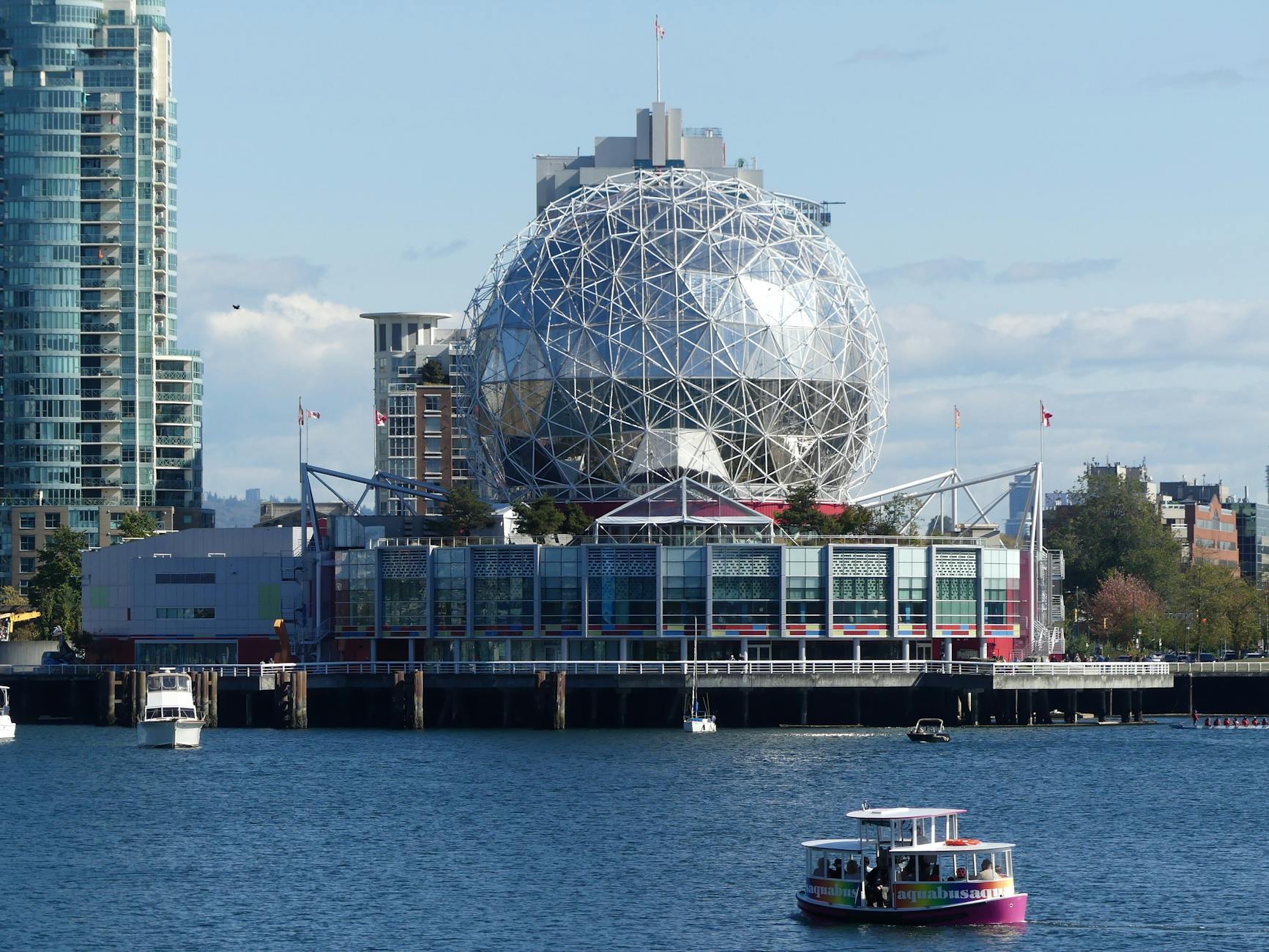
Science World is a five-storey science museum housed in a 47-metre-diameter geodesic dome at 1455 Quebec Street, on the eastern shore of False Creek. The exterior is wrapped in 766 triangular panels and 391 lights — at night the dome glows in a programmed sequence visible across the city. It is one of Vancouver’s most-photographed buildings.
Inside, the science centre is laid out across multiple themed galleries on three main floors: a ground-floor entry concourse, a middle-level main exhibition floor, and an upper level housing the OMNIMAX Theatre and Search: Hands-on for the youngest visitors. Outdoor exhibits sit in the Ken Spencer Science Park, a half-acre urban park immediately east of the dome.
Quick facts:
- Address: 1455 Quebec Street, Vancouver, BC
- Founded as the Arts, Sciences and Technology Centre (1982); current location since 1989
- Approx. 200,000 ft² (18,500 m²) total area
- Annual visits: ~700,000
- Hours: 10:00 a.m. – 5:00 p.m. daily; reduced winter hours possible
- Adult admission 2026: $35.95 CAD
- Closed: Christmas Day; reduced hours Dec 24 and Dec 31
Allow 3 to 4 hours for a thorough visit, longer if you include OMNIMAX or feature exhibitions.
Science World Tickets & Hours (2026)
Buy online at scienceworld.ca/your-visit.
2026 ticket prices (taxes included):
- Adult (19+): about $35.95 CAD
- Senior (65+), Student (with valid ID), Youth (13–18): about $30.95
- Child (3–12): about $26.95
- Under 3: free
- OMNIMAX add-on: about $7–$10 per person on top of admission
- Combo Admission + OMNIMAX: about $42 CAD adult
Annual membership: About $135 individual, $250 family. Pays for itself on a second visit and includes free OMNIMAX (excluding premium screenings).
Hours:
- Daily 10:00 a.m. – 5:00 p.m.
- Last admission: 4:00 p.m.
- Closed Christmas Day; reduced hours Dec 24 and 31
- Special evening hours during major events; check the website
Plan to arrive at opening for shortest queues; mid-day school groups arrive 11:00 a.m. – 1:00 p.m.
A Brief History & the Telus Naming Era
The geodesic dome was built as the Expo Centre for the 1986 World Exposition. After Expo 86 closed, the building was repurposed as a science centre and reopened in May 1989 as Science World.
From 2005 to 2020 the venue was branded as Science World at Telus World of Science under a $9 million naming-rights agreement with the Canadian telecom company Telus Corporation. Many older travel guides still use the Telus name. The agreement ended in 2020 and the venue reverted to the original name “Science World” — though some signage on the building exterior and the OMNIMAX still references Telus.
The Buckminster Fuller-inspired dome was originally designed by Vancouver architects Bruno Freschi (Expo 86’s chief architect) and continues to be one of the city’s most distinctive landmarks.
Permanent Galleries & Exhibits
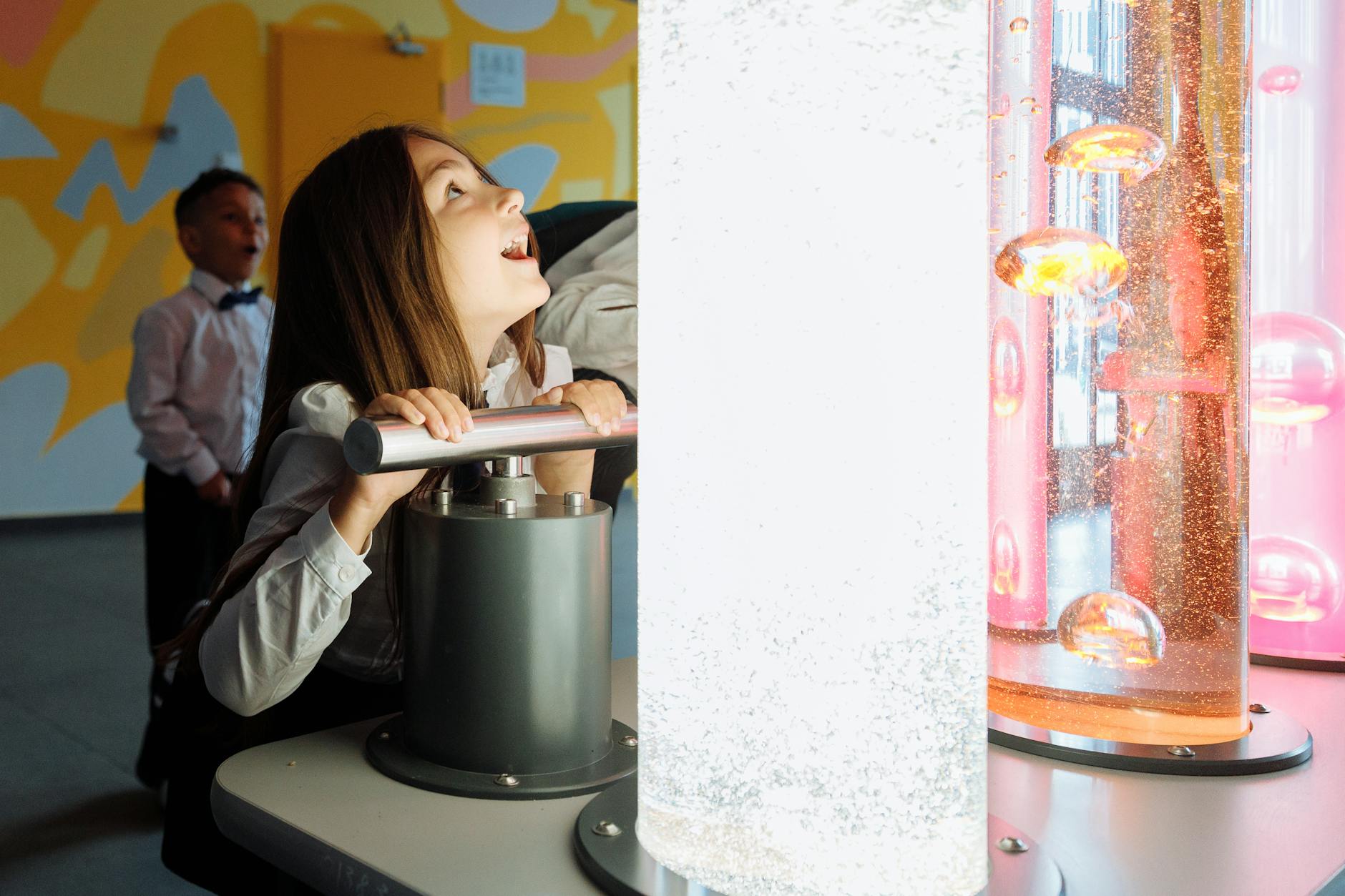
The permanent galleries cover most major science domains and lean heavily into hands-on, do-it-yourself interaction. Highlights:
Search: Hands-on for the Younger Set. A dedicated gallery for kids 0–6 with water play, sand and sensory tables, climbing structures, and a young-child theatre. Stroller parking just outside.
Eureka! Gallery. Physics-of-everyday-life exhibits — a giant slingshot, gear racks, marble runs, stop-motion animation stations. Probably the most-photographed gallery.
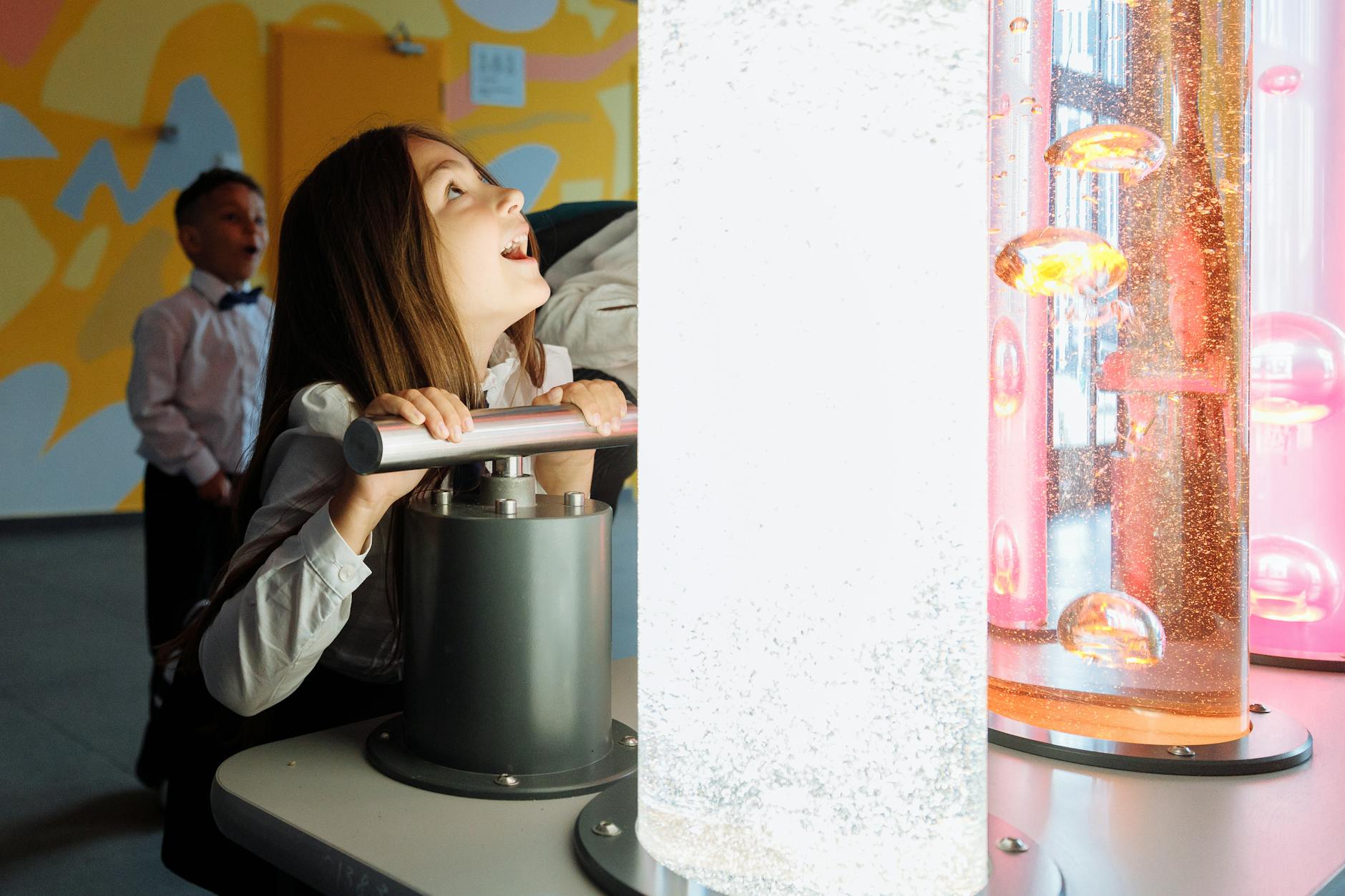
Wonder Gallery. Optical illusions, motion experiments, hand-cranked apparatus, the famous static-electricity globe (the one that makes your hair stand on end).
Our World Gallery. Earth-science focused — climate, sustainability, agriculture, water systems. Includes the popular full-size life-cycle stations and the live worm farm.
BodyWorks Gallery. Health and biology — the giant beating-heart exhibit, the brain function stations, eye-and-vision experiments, and the favourite “build your own digestive system” interactive.
Puzzles & Illusions Gallery. A small but addictive gallery; expect to lose 30 minutes you didn’t plan to spend.
Live Science Stage Shows. Daily 20-minute live-experiment shows on rotating topics — combustion, liquid nitrogen, Newton’s laws. Show schedule posted at the front desk and on the screens at the entrance.

2026 Feature Exhibitions
Science World rotates a major travelling feature exhibit every six to nine months in the upstairs feature gallery. Currently scheduled for 2026:
Artemis Space Adventure with LEGO® Bricks. Running through April 6, 2026 — a hands-on Artemis-themed exhibit inspired by NASA’s mission to return humans to the Moon. Kids design lunar rovers, build moon bases, and solve deep-space exploration challenges using LEGO bricks.
Spring/Summer 2026: A new feature exhibit replaces Artemis after April 6; check scienceworld.ca for current programming.
Feature exhibits typically require an additional $5–$10 surcharge over base admission, except for members and on certain promotional days.

The OMNIMAX Theatre
Science World’s OMNIMAX theatre is housed in the upper portion of the dome and is the largest dome OMNIMAX theatre in the world — a 27-metre-diameter screen that wraps around and above your seat. The film fills your peripheral vision in a way that flat IMAX cannot.
Films are 30–45 minutes and rotate seasonally. Recent screenings have included documentaries on the Amazon, the deep ocean, the Galapagos, and Indigenous-led conservation in BC. Daily showtimes posted on the website.
Tickets: $7–$10 add-on with admission; standalone OMNIMAX ticket about $13. Members get free OMNIMAX (excluding premium evening screenings).
Worth it? Almost universally, yes — the curved-dome screening is genuinely different from a regular cinema. Best for kids 5+ and adults who appreciate documentary work. Some young children find the immersive scale overwhelming; ask at the door if your child can sit in a back row to soften the effect.
Outdoor Ken Spencer Science Park
The Ken Spencer Science Park is a half-acre outdoor extension of Science World, immediately east of the dome. Open seasonally (typically May through September), the park features:
- An interactive water-flow exhibit (kids can build dams and divert rivers)
- A pollinator garden and beehives
- Rotating outdoor sculpture and installation art
- The “Big Dig” sandbox with digging tools and skeleton-fossil replicas
- The annual Lights at Science World winter walking installation (typically December)
Free with Science World admission. The outdoor park can be a sanity-saving break from the indoor crowds on busy summer days.

Science World with Kids
Science World is one of the city’s best family attractions, but is most rewarding for ages 4 and up. By age:
Babies and toddlers (under 3). Free admission. The Search gallery on the upper level is appropriate; most other exhibits are too high or too cognitively demanding. A 60–90 minute visit is enough.
Preschoolers (3–6). Search and Eureka are perfect; Wonder Gallery is mostly accessible. Plan 2–3 hours.
Elementary (7–12). Peak audience. Every gallery, every live show, OMNIMAX, and feature exhibits all work at this age. Plan 4 hours minimum; many families spend a full day.
Teens (13+). Wonder, Puzzles & Illusions, the live-science demos and OMNIMAX still hold up. Some older teens find the kid-focused galleries less engaging — pair with the Center for the Arts or Granville Island for a balanced day.
Special-needs families: Science World runs Curious Days sensory-friendly mornings monthly with reduced light/sound, dedicated quiet rooms, and lower visitor caps. Check the events calendar.
For a wider family attraction list, see our Vancouver with kids pillar.
Tips for the Best Visit
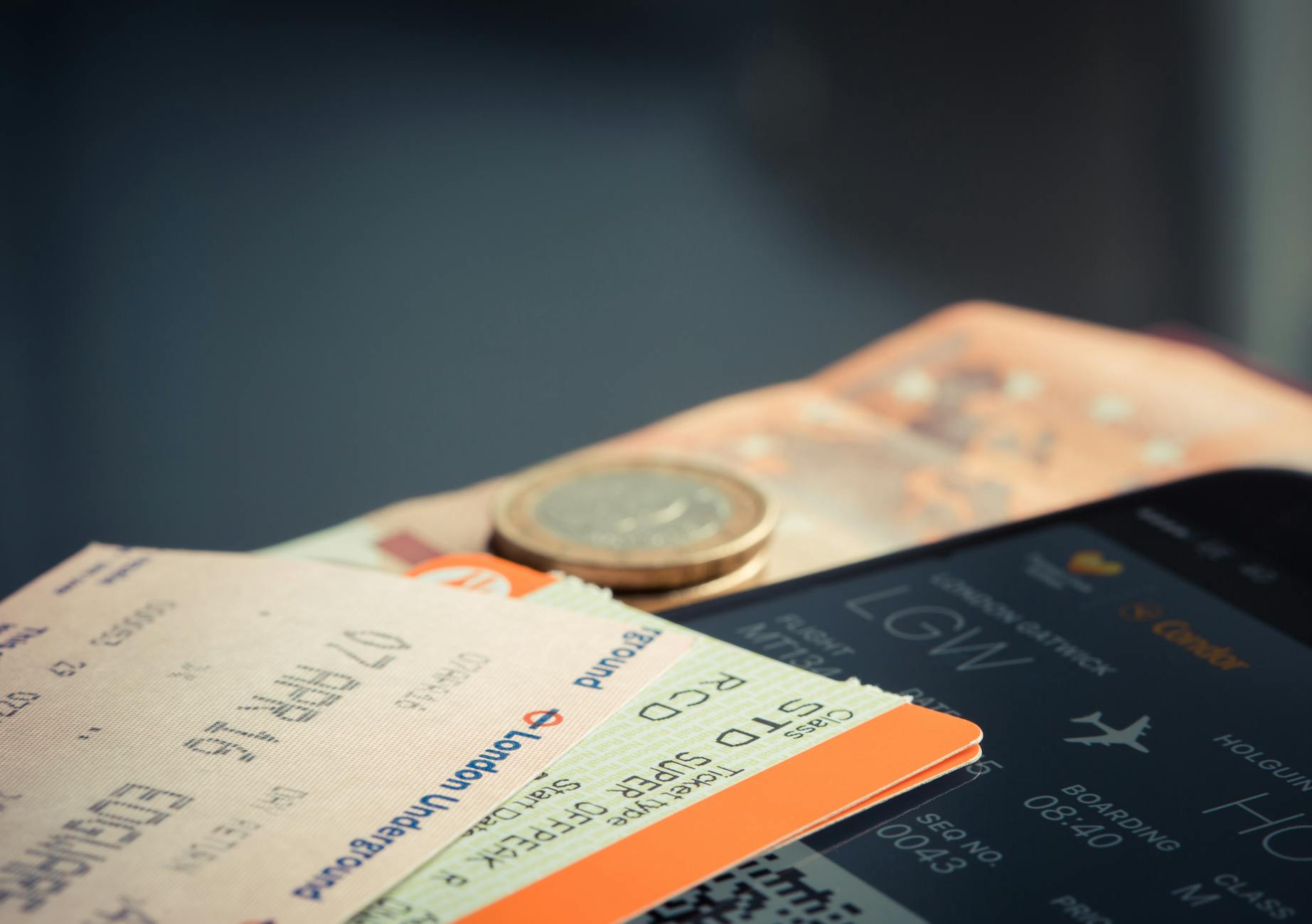
Buy online. Save the queue at the front desk and lock in your preferred OMNIMAX showtime.
Arrive at 10:00 a.m. The first hour is the quietest, and the live-show schedule is fresh.
Check the day’s programming. Live science shows, dome demonstrations, and OMNIMAX showtimes are posted at the entrance and on the website.
Eat before you go or pack snacks. The on-site Triple-O’s burger counter is fine but pricey; outside food is allowed but discouraged.
Plan around energy levels. Many families do Science World as a “morning, then lunch break, then back if needed” strategy — a Triple-O’s lunch break or a quick walk along the Olympic Village seawall (5 minutes east) breaks up the sensory overload.
Don’t miss the dome at night. If you’re already in the area for dinner at Olympic Village or False Creek, swing by Science World after dark — the 391-light dome programming runs from sunset to midnight and is one of the city’s prettiest spectacles.
Getting to Science World
Address: 1455 Quebec Street, Vancouver.
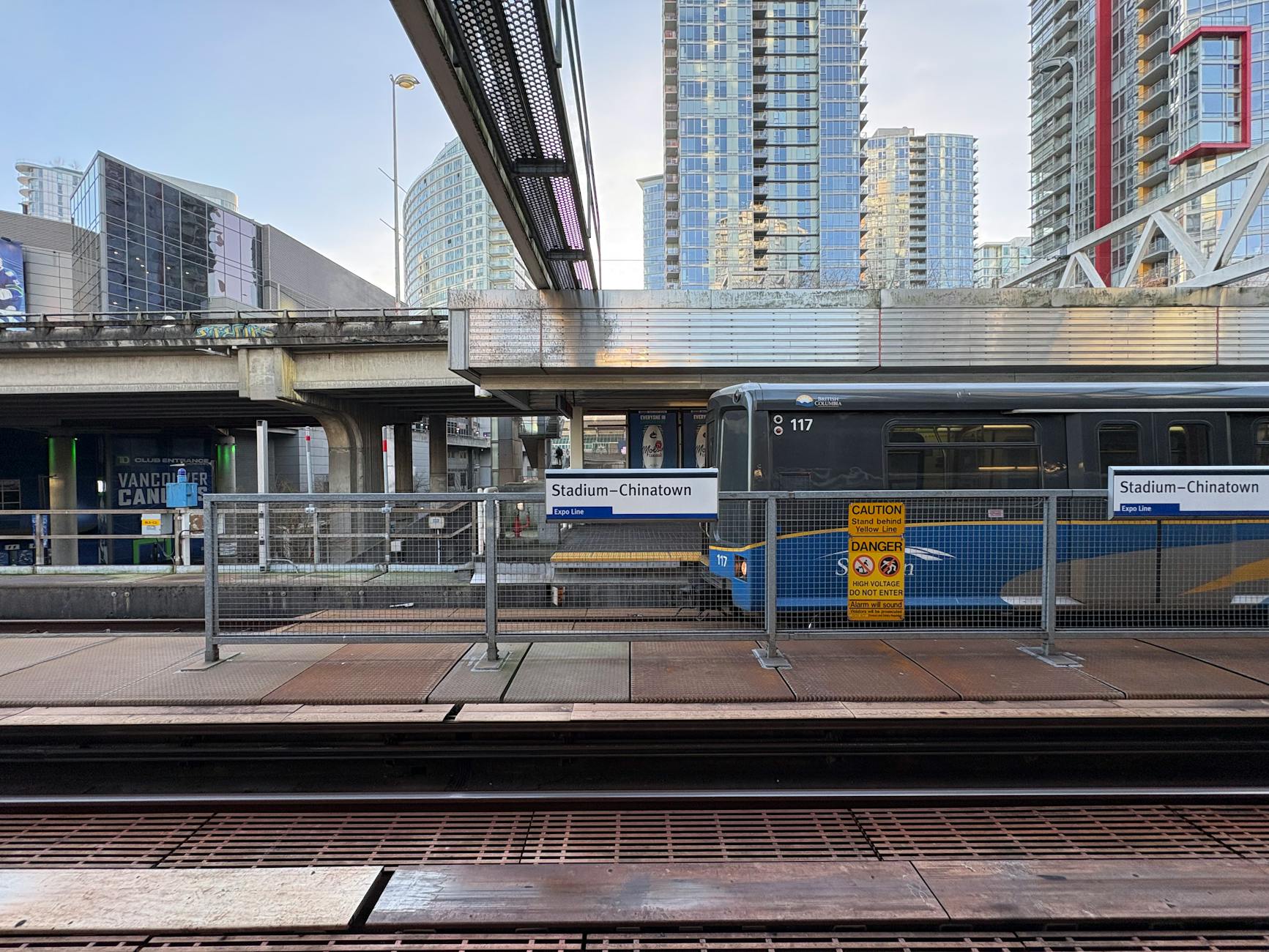
By SkyTrain. Main Street – Science World station on the Expo Line is directly across the street; literally 60 seconds from the platform to the front door. Probably the most transit-accessible major attraction in Vancouver.
By Aquabus or False Creek Ferries. The Aquabus runs to Spyglass Place and Olympic Village, both 7–10 minute walks to Science World. False Creek Ferries also serves Olympic Village. About $7–$8 each way; a fun arrival from Granville Island or downtown.
By bike. The False Creek Seawall connects Science World to Olympic Village, Granville Island, and downtown via a continuous protected bike path. Mobi bike-share docks at the front entrance.
By car. Pay parking at the on-site Science World lot ($4.50/hour or $18/day). Reasonably-priced compared to downtown.
For a wider transit overview, see our Vancouver transportation guide.
Food & Membership
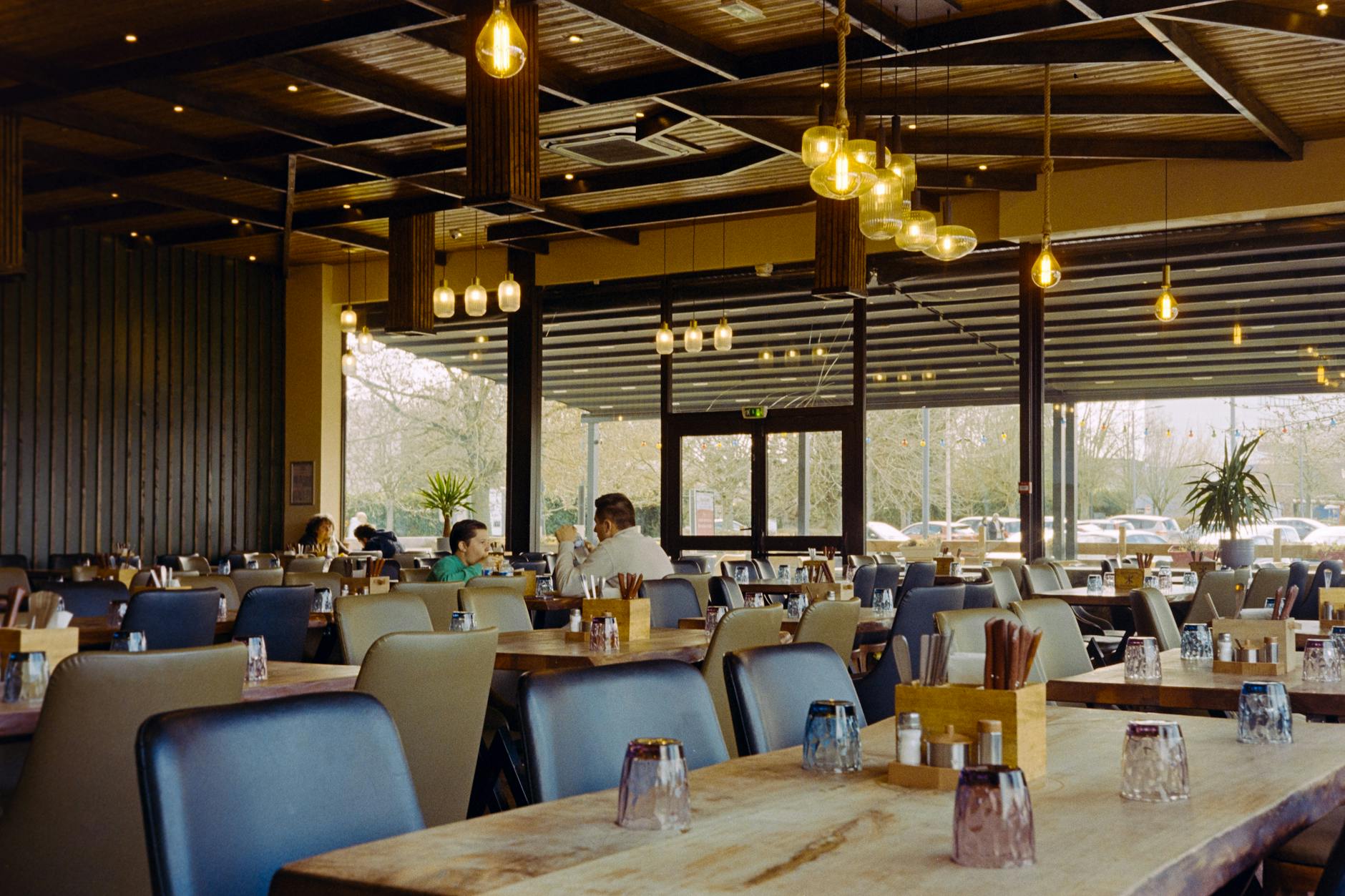
Triple O’s Café. The on-site burger counter (the BC chain you’ll see across the province) — burgers, fries, salads, kids’ meals. Mains $14–$18.
Outside food: Allowed but officially discouraged; the indoor seating areas are open to picnic-bringers.
Nearby restaurants: Olympic Village’s restaurant strip is 5 minutes east; Yaletown is 10 minutes west via the seawall; the Main Street craft-beer corridor is 15 minutes south. See our Vancouver food scene pillar.
Annual membership. $135 individual, $250 family (2 adults + 4 kids). Includes free OMNIMAX, free guest passes, members-only previews, and 10% gift shop discounts. The smartest single purchase if you live in Greater Vancouver and have school-age kids.
Science World Vancouver FAQs
How much is Science World Vancouver in 2026?
Adult tickets are $35.95 CAD; senior/student/youth $30.95; child (3–12) $26.95; under 3 free. OMNIMAX add-on $7–$10. Buy online at scienceworld.ca.
How long do you spend at Science World?
3 to 4 hours is typical. Add 45 minutes if you include OMNIMAX. Families with kids 7–12 frequently spend 5–6 hours.
Is Science World still called Telus World of Science?
No. The 2005–2020 sponsorship agreement with Telus ended; the official name reverted to Science World in 2020.
Does Science World have an OMNIMAX theatre?
Yes — the largest dome OMNIMAX theatre in the world. Add-on tickets $7–$10 with admission. Films rotate seasonally.
Is Science World good for toddlers?
Yes — the Search gallery is dedicated to ages 0–6 with water tables, sensory play, and climbing. Most other galleries are best for 4+.
Is Science World worth it?
For families with kids 4–12, it is one of the highest-value paid attractions in the city. For solo adult travellers without kids, it ranks lower than the Vancouver Art Gallery or the Museum of Anthropology.
Where is Science World in Vancouver?
1455 Quebec Street, at the eastern end of False Creek. Directly across from Main Street – Science World SkyTrain station.
What’s currently on at Science World?
The Artemis Space Adventure with LEGO Bricks feature exhibition runs through April 6, 2026, with a new feature replacing it after that date. Daily live-science shows and rotating OMNIMAX films also run year-round.
Birthday Parties & Group Bookings
Science World hosts roughly 1,200 birthday parties a year, making it Vancouver’s most-popular kids’ birthday venue. Several party packages run year-round:
Birthday Bash Party (basic). 90 minutes; includes a private reserved party room for cake/presents, all-day general admission for up to 12 kids, and a science demonstration in the room (typically a liquid-nitrogen show, slime-making, or rocket-launch activity). About $345 base + $30 per child. Add OMNIMAX for $5 per kid.
Galaxy Birthday Bash (premium). 2 hours; private party room, all-day admission for up to 16 kids, two science demonstrations, takeaway loot bags, and a cake. About $550 base.
Mad Science Party. The most science-focused option; 90 minutes with a costumed Mad Scientist host doing 4–5 explosive demos. About $480 for up to 14 kids.
Group bookings. 10+ people get tiered discounts (10 percent off at 10–24 people; 15 percent at 25+). Schools, scout troops, sports teams, and corporate offsite groups regularly use Science World — the science-demonstration component scales well to mixed-age groups.
Corporate events & private buyouts. Science World rents the entire facility for evening private events from $25,000+ for the full venue (capacity 1,000+ guests). Smaller buyouts of individual galleries from $5,000. The dome-shaped Centre Stage hosts concerts and corporate keynotes (the venue accommodates a stage, sound, and projection mapping). Contact privateevents@scienceworld.ca.
Booking timing. Saturday afternoon birthday slots fill 6–8 weeks ahead, especially during October (Halloween-themed parties) and December (Christmas-themed). Weekday birthdays are easier and often discounted. The booking calendar opens 4 months ahead at scienceworld.ca/birthdays.
After Dark: 19+ Adult Science World Events
Science World runs 19+ “After Dark” adult-only events monthly — typically the last Friday of each month from 7:30 to 11:00 p.m. The events are surprisingly popular among Vancouver’s 25–40 demographic and consistently sell out 2–3 weeks ahead.
What’s there:
- Full Science World access after public hours
- Themed bar service (cocktails, BC craft beer, wine; 4–6 themed cocktails per event)
- Live DJ in the Centre Stage (varies by month)
- Special exhibits and installations not available during regular daytime hours
- OMNIMAX screenings (often a curated documentary)
- Adult-only science demos (more advanced chemistry, more dramatic results)
- Curator-led talks on rotating topics
2026 themed events: Past events have included “Cosmos Night” (astronomy + Carl Sagan documentary), “Beer Brewing Science” (paired with BC craft brewers), “Climate Crisis” (sober examination of regional climate science), “Pride Night” (June), and “Halloween Mad Science” (October). The events are a strong date-night option for Vancouver’s science-curious adults.
Tickets: About $35–$45 per person; includes admission and one drink. Member discount: 20 percent off. Sells out — buy ahead at scienceworld.ca/programs/after-dark.
Dress code: Casual to smart-casual. The dome runs warm with crowds; layers are smart.
How to find these events: The Science World newsletter publishes the After Dark calendar each month; the events also appear on most Vancouver event aggregators. Most months the event has a clear theme and ticket price posted 4–6 weeks ahead.
The Dome at Night: Photography Locations
Science World’s geodesic dome has 391 lights running through programmed sequences from sunset to midnight every night — and it’s one of Vancouver’s most photographed buildings, especially at twilight when the dome glows against the post-sunset blue sky. Several photography tips:
Best vantage points:
- Olympic Village seawall — across False Creek to the west. The dome reflects in the water; downtown skyline forms the backdrop. Walk 10 minutes from Main Street SkyTrain. Iconic vantage; busiest at sunset.
- Cambie Bridge sidewalk — across False Creek to the north. Dome from the side with the eastern False Creek beach as foreground. Free; quiet most evenings.
- Quayside Marina (Olympic Village) — just east of the Olympic Village SkyTrain. Dome reflects in the water with the boats as foreground.
- The Sphere (the rooftop terrace at JJ Bean Olympic Village) — café with dome views; only accessible during café hours (6 a.m.–6 p.m. weekdays; 7 a.m.–6 p.m. weekends). Limited but excellent for sunset photos before the dome lights begin.
- Aquabus from Hornby Street — a moving photo platform; bring a fast shutter speed. The crossing takes 5–10 minutes and the dome appears continuously in your right-hand-side view.
Best time of day. Twilight — about 30 minutes after sunset — gives you the dome’s lights against a deep-blue sky and is the most photographed window. The dome lights cycle through 8–10 colour patterns; wait through 2–3 cycles to catch the most striking colour combinations.
Equipment. A small travel tripod is essential for anything beyond phone snapshots. Long exposures (1–4 seconds) capture the colour cycles; phones in night mode handle the dome surprisingly well but struggle with the moving water reflections. Wide-angle lenses (16–35 mm) give the most dramatic dome-and-sky framing.
Drone notes. Drones are prohibited in downtown Vancouver and over False Creek without specific Transport Canada certification. Don’t fly. The signature photos work fine from ground level.
Related reading: Things to Do in Vancouver · Vancouver with Kids · Vancouver Aquarium · Granville Island · Vancouver Itinerary · Vancouver on a Budget
Leave a Reply