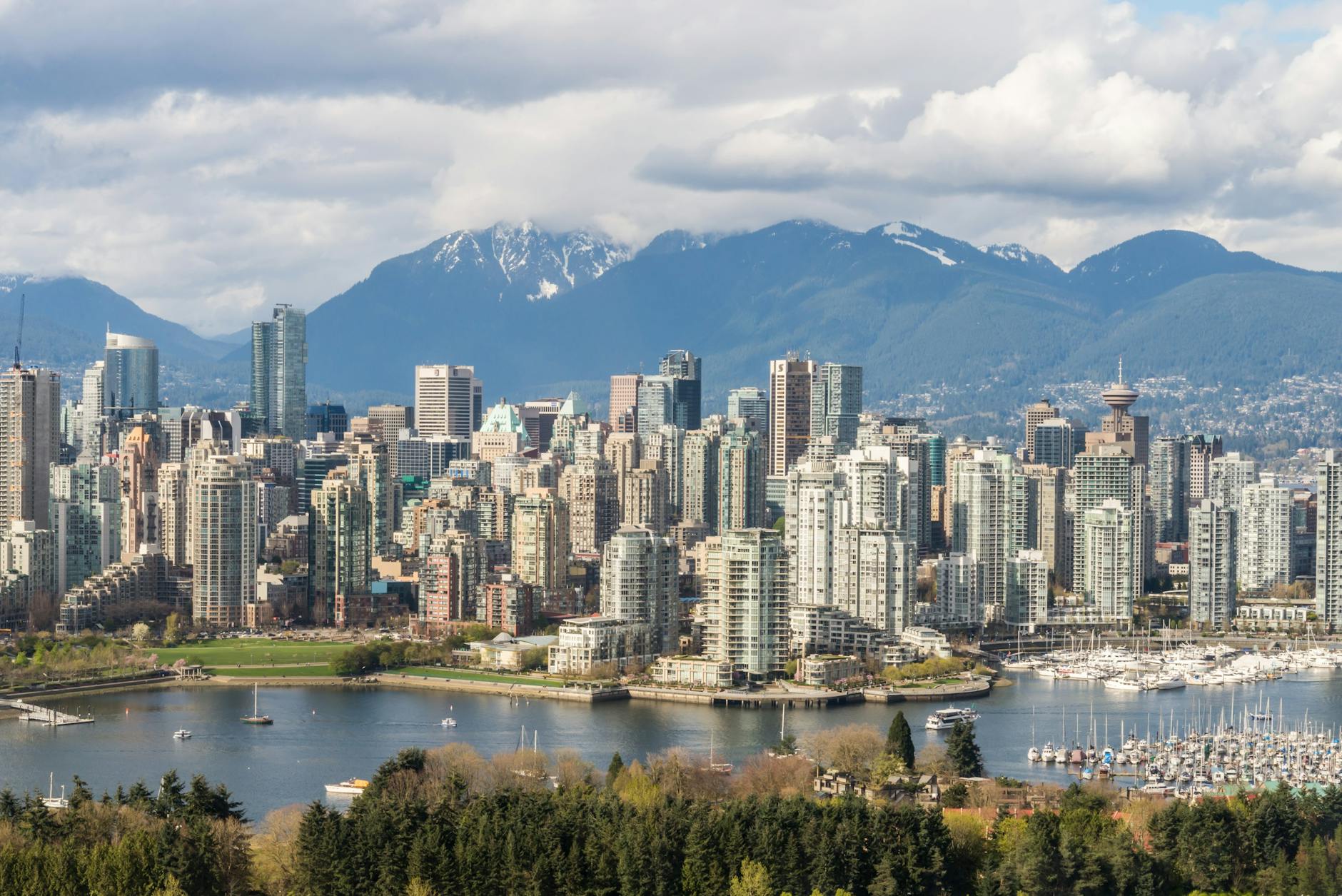
Vancouver weather by month follows a predictable West Coast maritime rhythm: cool, wet winters; long, dry summers; and shoulder seasons that swing dramatically depending on whether the Pacific or the Coast Mountains are winning that week. The city averages 1,189 mm (47 in) of rain across 168 wet days a year, with November the wettest (188 mm) and July the driest (40 mm). Summer highs hover at 22°C (72°F); winter lows at 1°C (34°F).
This guide breaks down each month with averages, what to actually expect on the ground, what’s open or closed, and which trips work best — so you can pick a travel window that matches your tolerance for rain, your budget, and the activities on your wishlist.
Table of Contents
Vancouver Weather by Month: Quick Reference
Vancouver sits at 49°N, surrounded by ocean on three sides and the Coast Mountains on the fourth. That geography makes the climate temperate oceanic — milder than its latitude suggests in winter, cooler than the rest of Canada in summer.
Year-round averages at a glance:
- Average annual high: 14°C / 57°F
- Average annual low: 7°C / 45°F
- Annual rainfall: 1,189 mm / 47 in
- Annual snowfall: 38 cm / 15 in (mostly Dec–Feb)
- Sunniest month: July (310 sunshine hours)
- Cloudiest month: December (60 sunshine hours)
- Wettest month: November (188 mm rain, 20 wet days)
- Driest month: July (40 mm rain, 7 wet days)
The mental model: from mid-May to late September, expect mostly dry, mild-to-warm weather. From October to April, expect frequent rain, mild temperatures, and short days. The transitions in May and October are unpredictable — both seasons can produce stunning sunny stretches or week-long rain marathons.
January in Vancouver
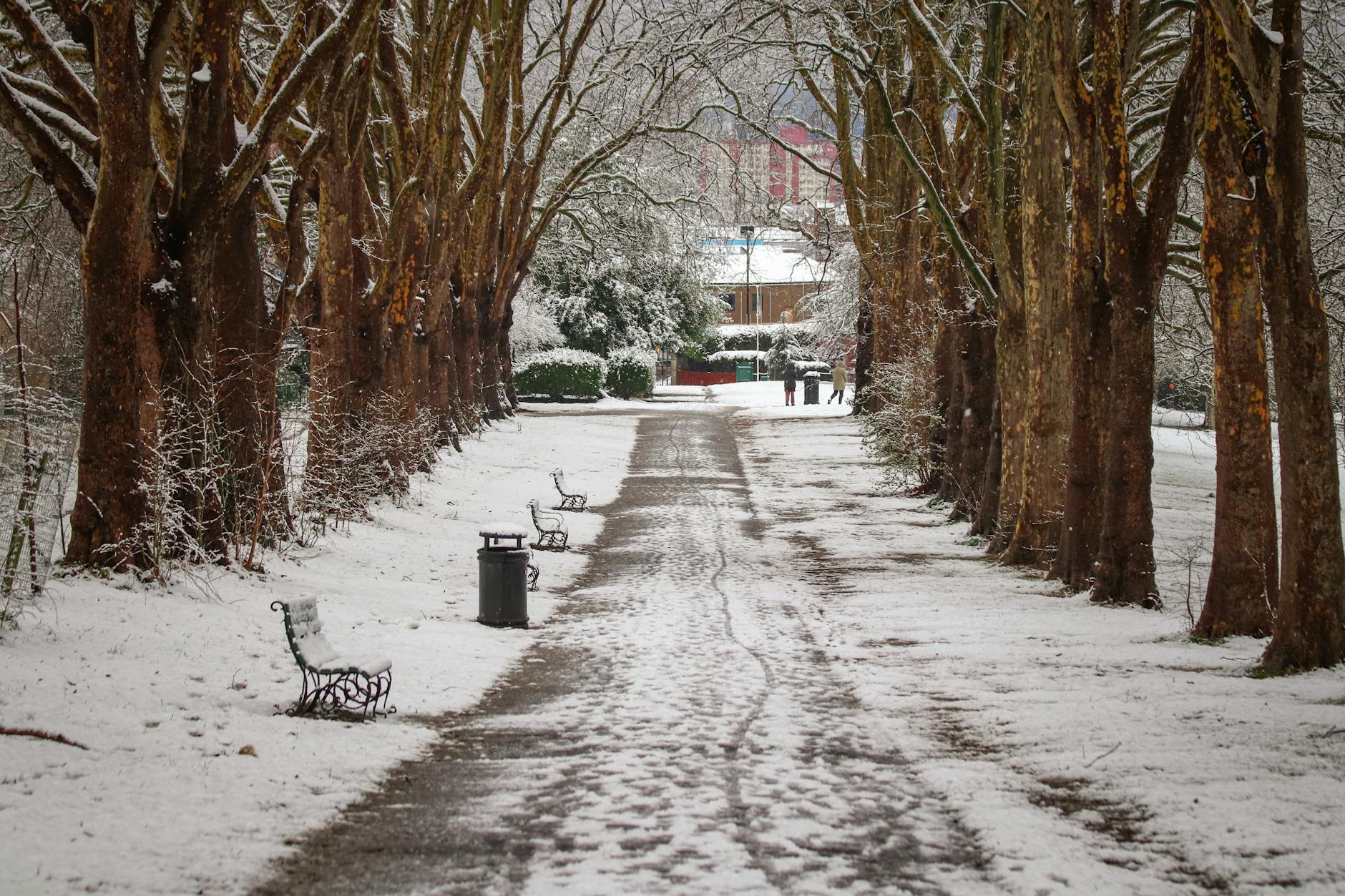
January is Vancouver’s coldest, second-rainiest month — and its quietest tourist month. Expect average highs of 7°C (45°F), lows of 1°C (34°F), and 168 mm of rain spread across 19 wet days.
What to expect:
- Daylight: 8h 23m at the start; 9h 26m by month’s end
- Sunrise/sunset: ~8:05 AM / ~4:30 PM (early January); ~7:45 AM / ~5:15 PM (late January)
- Snow chance: 30% of January days see snow showers; accumulating snow happens 2-3 times most winters
- Sea level temperature: Rare frost in city; mountains snowy daily
What’s open vs. quiet: Ski resorts (Grouse, Cypress, Seymour, Whistler) are at peak operation. Dine Out Vancouver runs mid-to-late January with $25/$35/$45 prix-fixe menus at 250+ restaurants. Capilano Suspension Bridge “Canyon Lights” runs through January 18. Stanley Park, museums, and shopping are wide open with thin crowds. Beach and outdoor patios are essentially closed.
Best for: Skiing day trips, indoor culture (Vancouver Art Gallery, Museum of Anthropology, Science World), Dine Out Vancouver foodies, and budget travelers — January hotel rates run 45-55% below July peak.
February in Vancouver
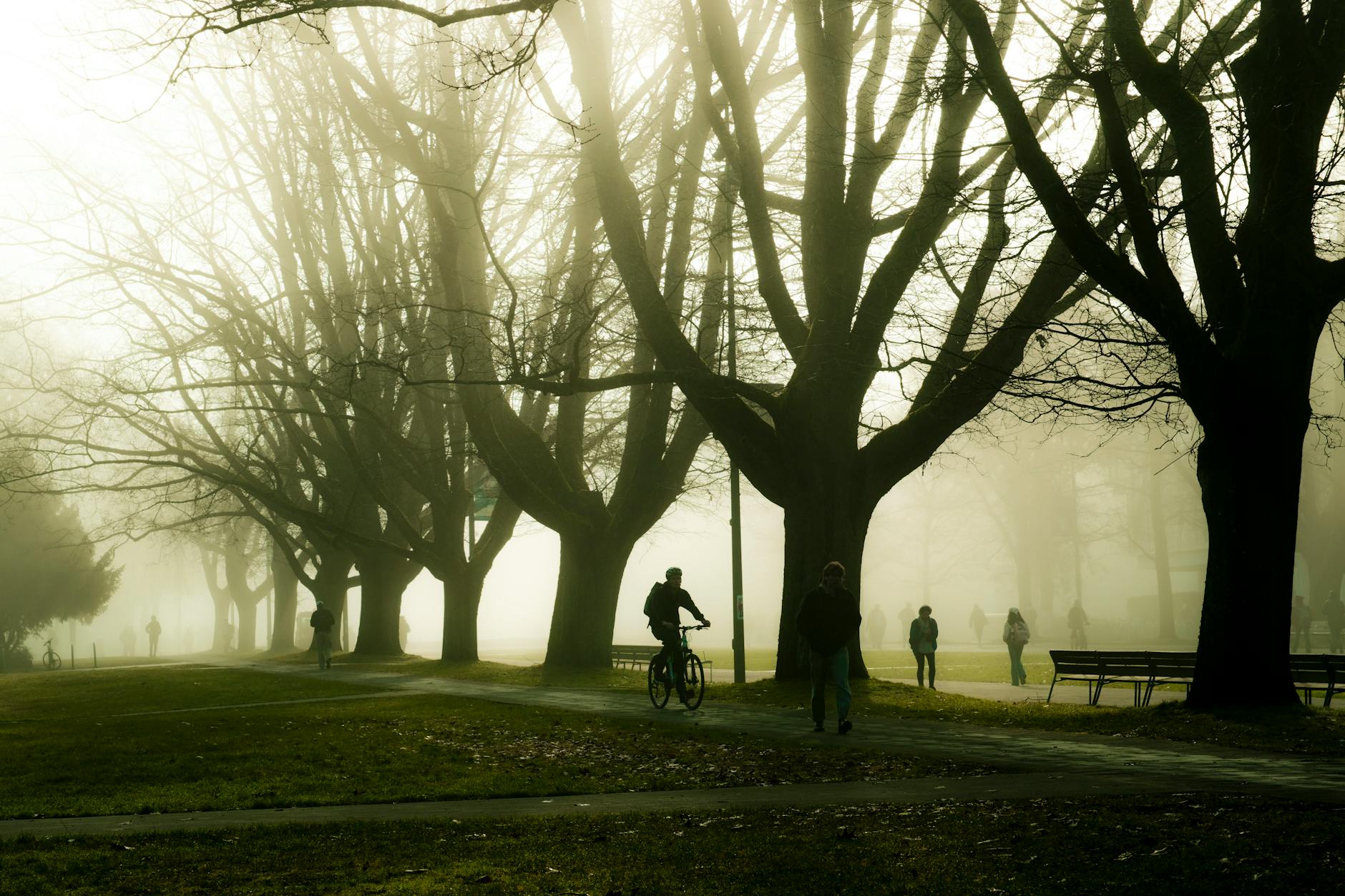
February is statistically the same as January in temperature but slightly drier and noticeably brighter as days lengthen. Average high 8°C (46°F), low 2°C (36°F), and 105 mm of rain across 15 wet days.
What to expect:
- Daylight: 9h 30m at the start; 11h 1m by month’s end (1.5 hours gained)
- Snow chance: Lower than January; the average accumulating snowfall is 12 cm
- Lunar New Year: Late January or mid-February depending on year; major Chinatown events
- BC Family Day: Third Monday of February (provincial holiday)
What’s open vs. quiet: Skiing in peak form. Lunar New Year parades through Chinatown. PuSh International Performing Arts Festival runs late January to early February. Whales begin southern migration past Vancouver Island. Cherry blossom early varieties (Whitcomb) start blooming in late February.
Best for: Lunar New Year culture, late-season skiing, urban explorers escaping snowier cities, and travelers chasing the cherry blossom early window without festival crowds.

March in Vancouver
March is the gateway month — when winter is still hanging on but spring is asserting itself. Average high 10°C (50°F), low 4°C (39°F), 114 mm rain across 17 wet days. Daylight stretches dramatically: 11h at the start, 13h at the end (with daylight saving time adding to evening light).
What to expect:
- Daylight saving time: Begins second Sunday of March; clocks move forward 1 hour
- Cherry blossoms: Akebono and Yoshino varieties begin blooming late March
- Spring break crowds: Mid-March BC school break can fill mountain resorts and family-friendly attractions
- Mountain conditions: Lower mountains (Grouse, Cypress) starting to lose snow; Whistler still has 4-6 weeks of skiing
What’s open vs. quiet: CapU “Canyon Lights” closed; daytime Capilano open. Granville Island Public Market high traffic on weekends. Cycling on the Seawall returns. Restaurant patios reopen in last week. St. Patrick’s Day events Granville and Gastown.
Best for: Early cherry blossom photographers, families on spring break wanting a softer alternative to Whistler, anyone who wants to ski mornings and walk the seawall in the afternoon.
April in Vancouver
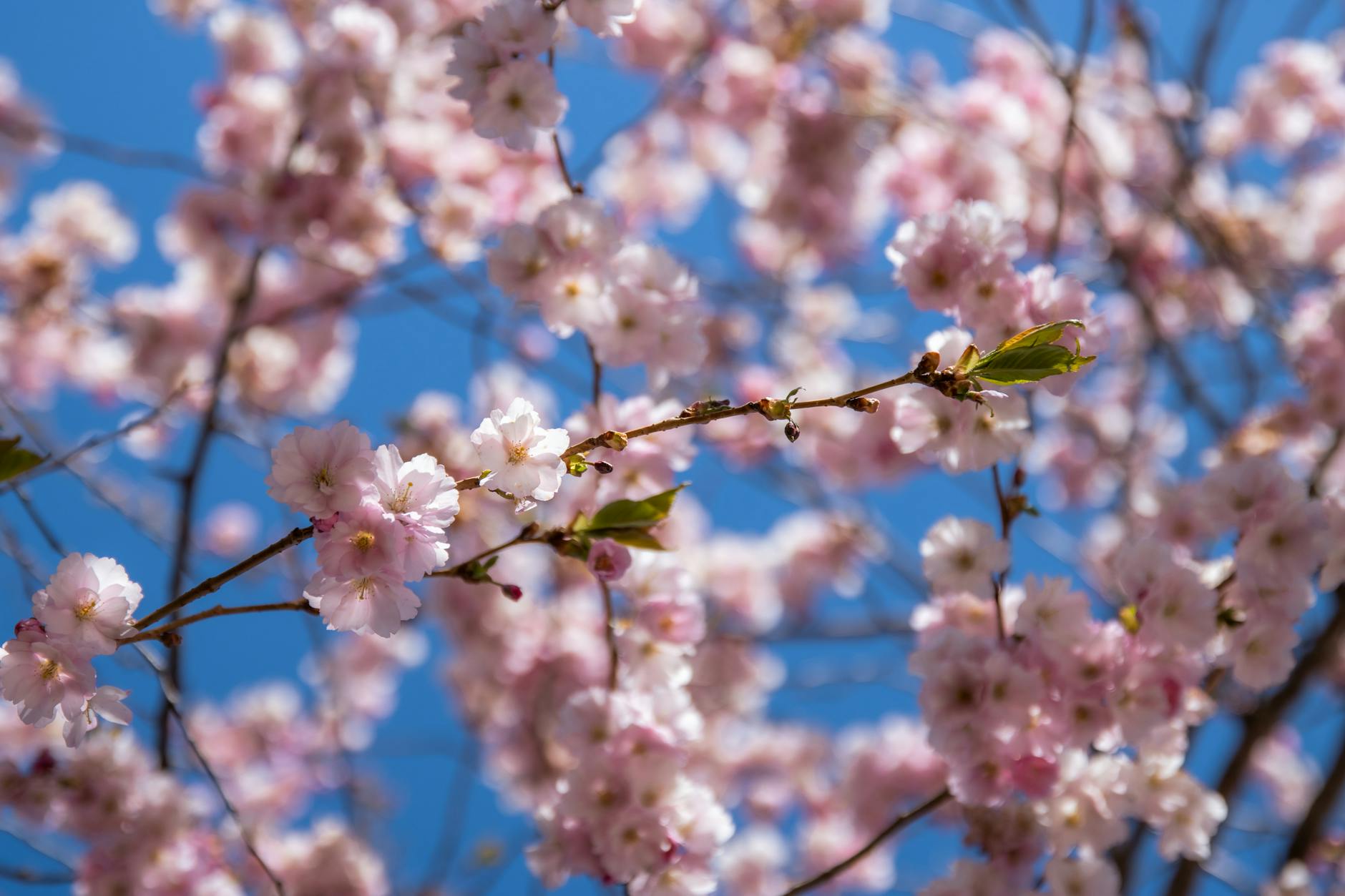
April is the cherry blossom peak month — and the unpredictable hinge between rainy season and dry season. Average high 13°C (55°F), low 5°C (41°F), 84 mm rain across 14 wet days. Some Aprils are gorgeous; others are damp from start to finish.
What to expect:
- Cherry blossom peak: Approximately April 1–14 for Akebono and Yoshino; April 15–25 for Kanzan
- Whistler closing: Whistler Blackcomb closes around mid-April (Whistler) and late May (Blackcomb glacier)
- Daylight: 13h 14m at start; 14h 30m by month’s end
- Patio season: Most outdoor patios fully open by mid-month
What’s open vs. quiet: Cherry Blossom Festival events citywide first three weeks. Sakura Days at VanDusen Botanical Garden one weekend mid-April. Hop-on Hop-off bus tours back to full season. Day trips to Vancouver Island work well.
Best for: Cherry blossom photographers (the single highest-value month), shoulder-season budgeters who can tolerate occasional rain, anyone who values flowers and longer evenings over guaranteed sunshine.

May in Vancouver
May is the unsung hero month — when temperatures climb, rain drops, and crowds haven’t yet arrived. Average high 17°C (63°F), low 9°C (48°F), 68 mm rain across 12 wet days. Daylight pushes past 15.5 hours by month’s end.
What to expect:
- Sunshine hours: 230 (more than triple December’s 60)
- Sea temperatures: Still cold (12°C/54°F) — too cold for most swimming
- Bears active: Black bear sightings on North Shore and Whistler trails resume
- Cycling: Stanley Park Seawall, false creek loops, Iona Beach all comfortable
What’s open vs. quiet: Bard on the Beach Shakespeare festival opens early June (set up in May). Whistler Mountain Bike Park typically opens mid-May. Cruise season ramps up. Most restaurant patios at full operation. VanDusen rhododendrons in peak bloom.
Best for: Travelers prioritizing dry weather and small crowds, photographers chasing both blossoms and longer light, value-seekers wanting summer-like conditions at shoulder-season prices.
June in Vancouver
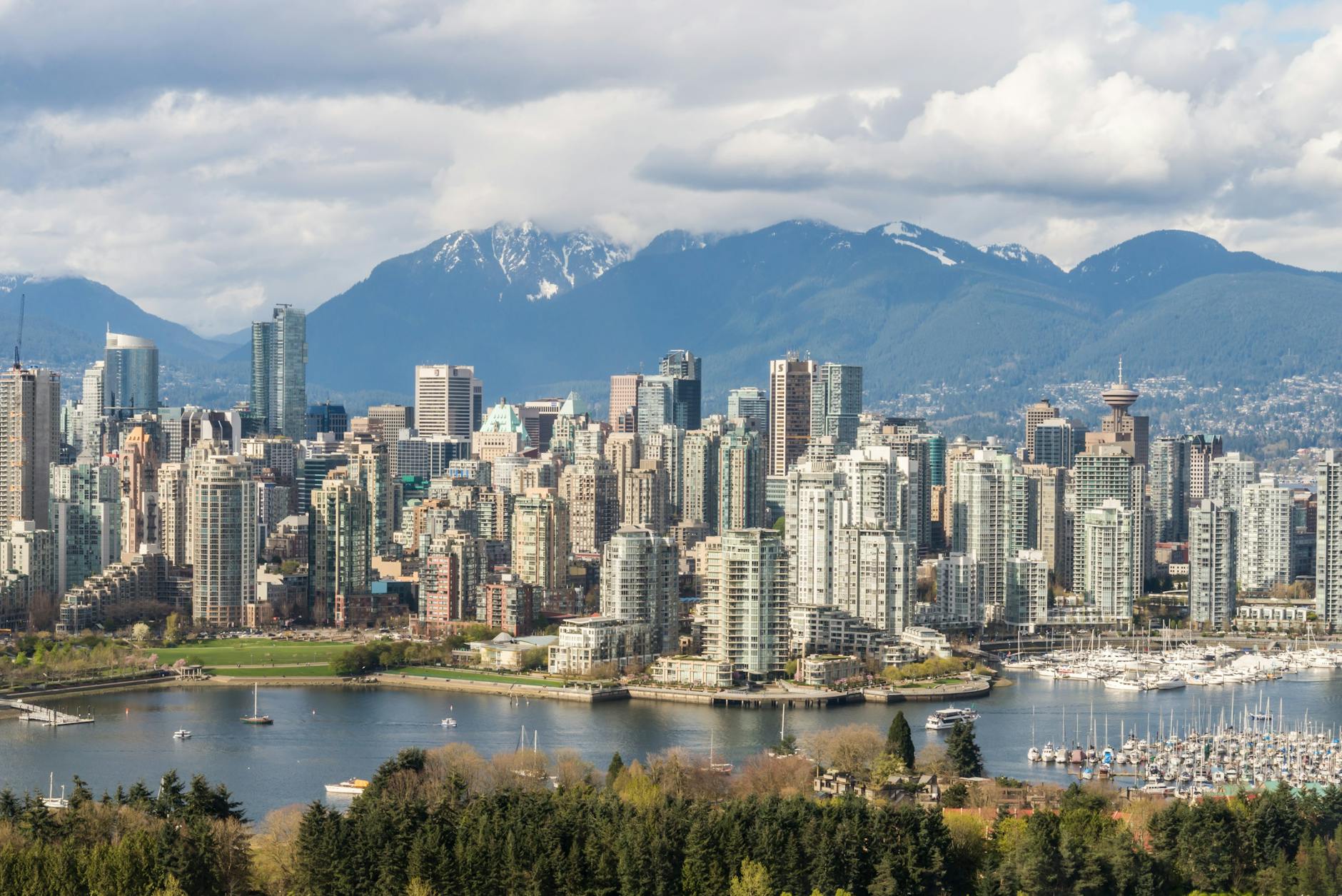
June kicks off Vancouver’s tourism peak, but it’s also the rainiest summer month — the city’s “June gloom” is real. Average high 20°C (68°F), low 12°C (54°F), 55 mm rain across 11 wet days.
What to expect:
- Solstice: June 20 or 21 with 16h 12m of daylight
- Sunset: 9:21 PM on the longest day
- Marine layer: Mornings can be cool, foggy near the water; clears by afternoon
- Wildflowers: Lighthouse Park, Pacific Spirit Park trilliums and salmonberries
What’s open vs. quiet: TD Vancouver International Jazz Festival late June. Bard on the Beach in full swing. Outdoor pools open mid-June (Kits Pool, Second Beach, New Brighton). Cruise season at maximum capacity. Whale watching in prime form.
Best for: Travelers wanting long evenings and warm temperatures without August’s smoke risk, festival-goers, anyone using Vancouver as a launchpad for Whistler hiking or cruising.
July in Vancouver
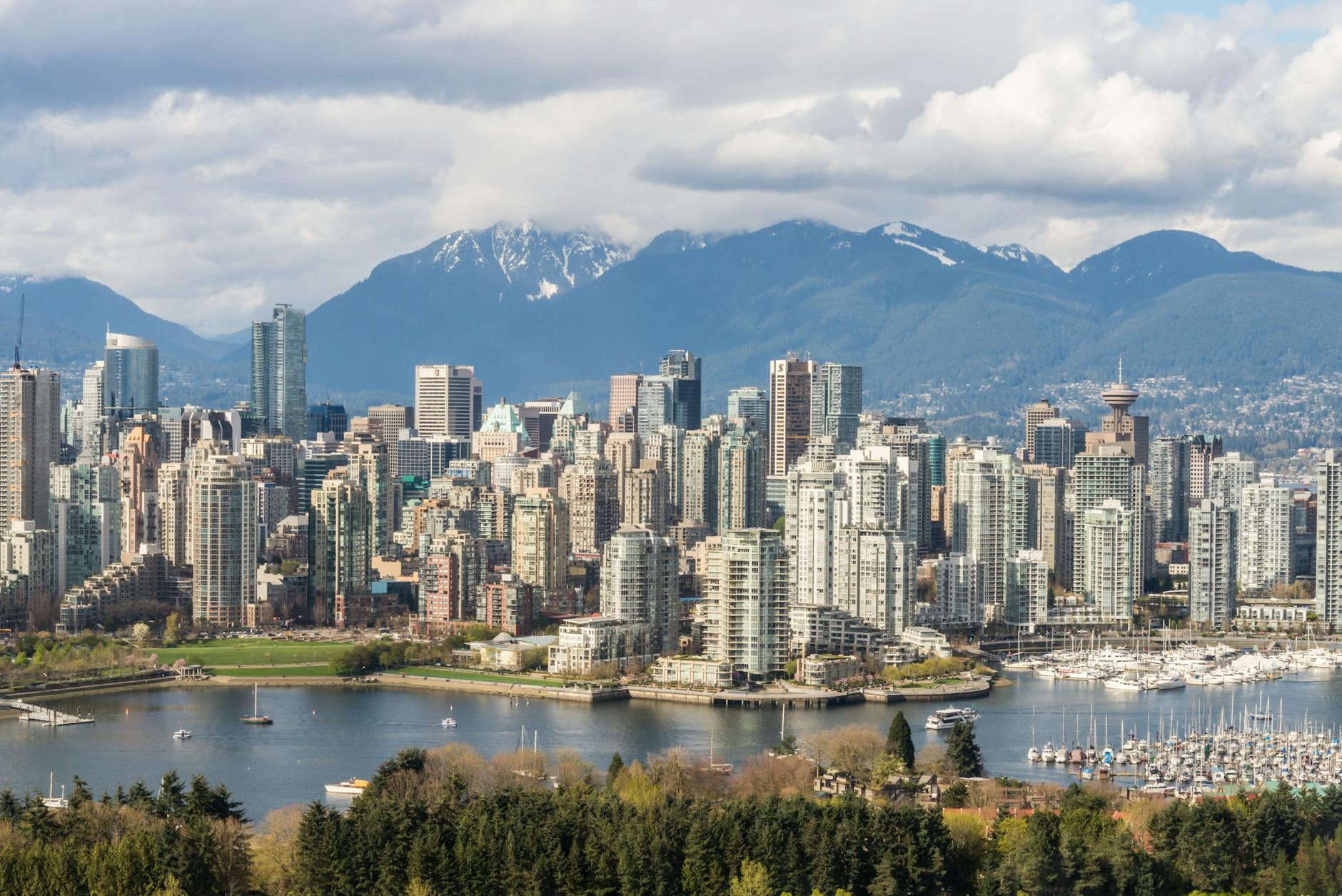
July is the platonic ideal of Vancouver weather: warm, dry, sunny, long. Average high 22°C (72°F), low 14°C (57°F), 40 mm rain across only 7 wet days. Sunshine hours peak at 310.
What to expect:
- Canada Day (July 1): Major festival in downtown Vancouver and Canada Place
- Honda Celebration of Light: Late July international fireworks competition over English Bay (3 nights, 400,000+ spectators)
- Wildfire smoke risk: Increasing concern; check airquality.canada.ca during BC fire season
- Beaches: Sea temperature 17°C (63°F) — still cool but swimmable for short periods
What’s open vs. quiet: Everything. This is peak season. Hotel prices peak. Restaurant reservations require advance booking. Trails busy. Whale watching, day trips, ferry routes, and Whistler all at maximum demand.
Best for: First-time visitors who want guaranteed weather, families with school-age kids, festival-goers, beach lovers, anyone who values reliability over budget.
August in Vancouver
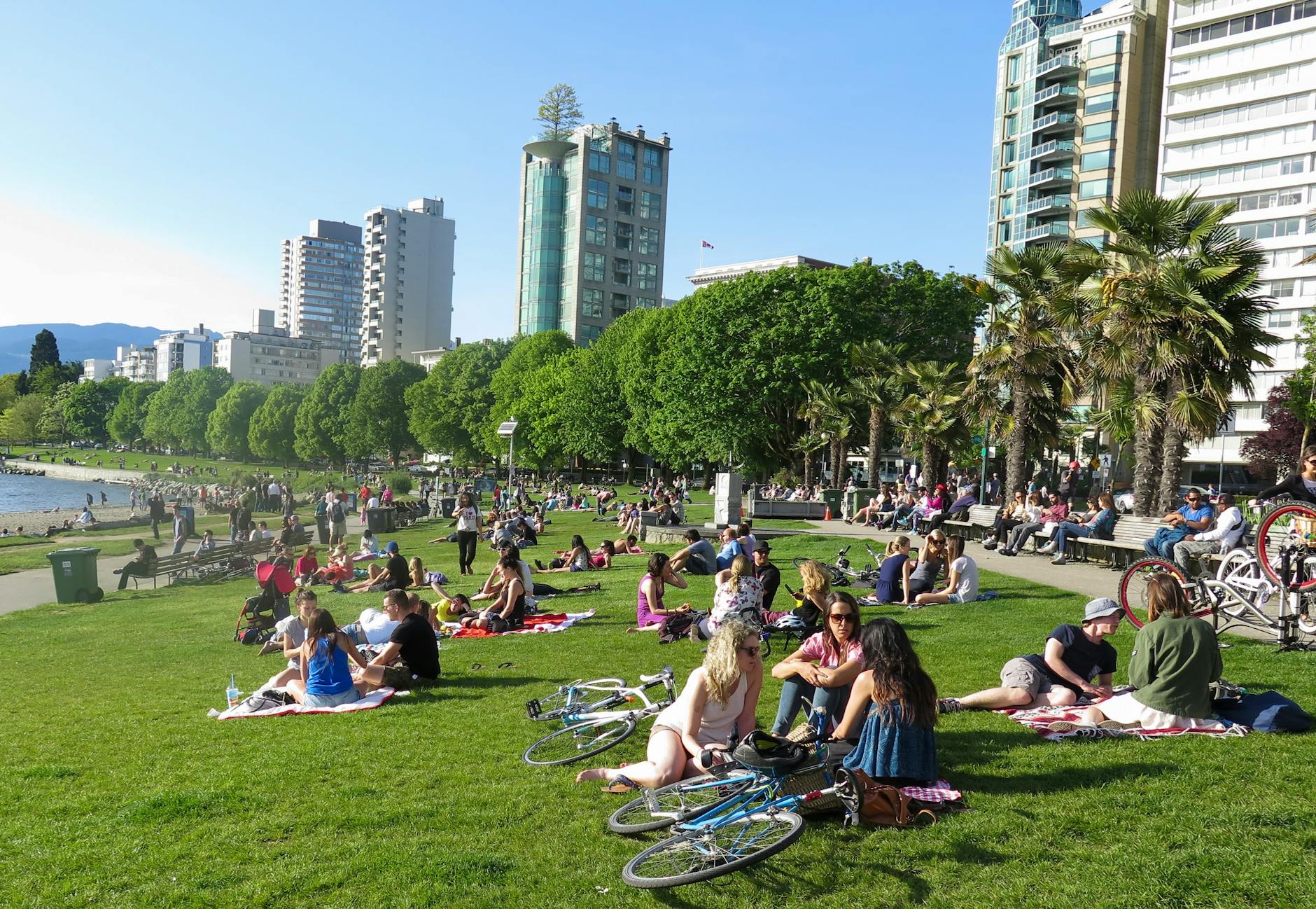
August matches July for warmth but is slightly less dry. Average high 22°C (72°F), low 14°C (57°F), 39 mm rain across 8 wet days. The single biggest variable in modern August is wildfire smoke.
What to expect:
- Sea temperatures peak: 18°C (64°F) — Vancouver’s swimming-friendliest month
- BC Day (first Monday): Provincial holiday; expect crowds at parks, beaches, ferries
- Pride Parade: Late July or early August; one of Canada’s largest
- Wildfire smoke: 2017, 2018, 2021, 2022, 2023, and 2024 all saw multi-week smoke episodes
What’s open vs. quiet: Pacific National Exhibition (PNE) opens mid-August through Labour Day weekend. Cruise season still peak. Patios busy. Whistler bike park at peak. Outdoor concerts every weekend.
Best for: Beach lovers, festival-goers, anyone wanting peak warmth — but build flexibility into the itinerary for smoke days, when indoor activities (Vancouver Aquarium, Museum of Anthropology) become essential.
September in Vancouver
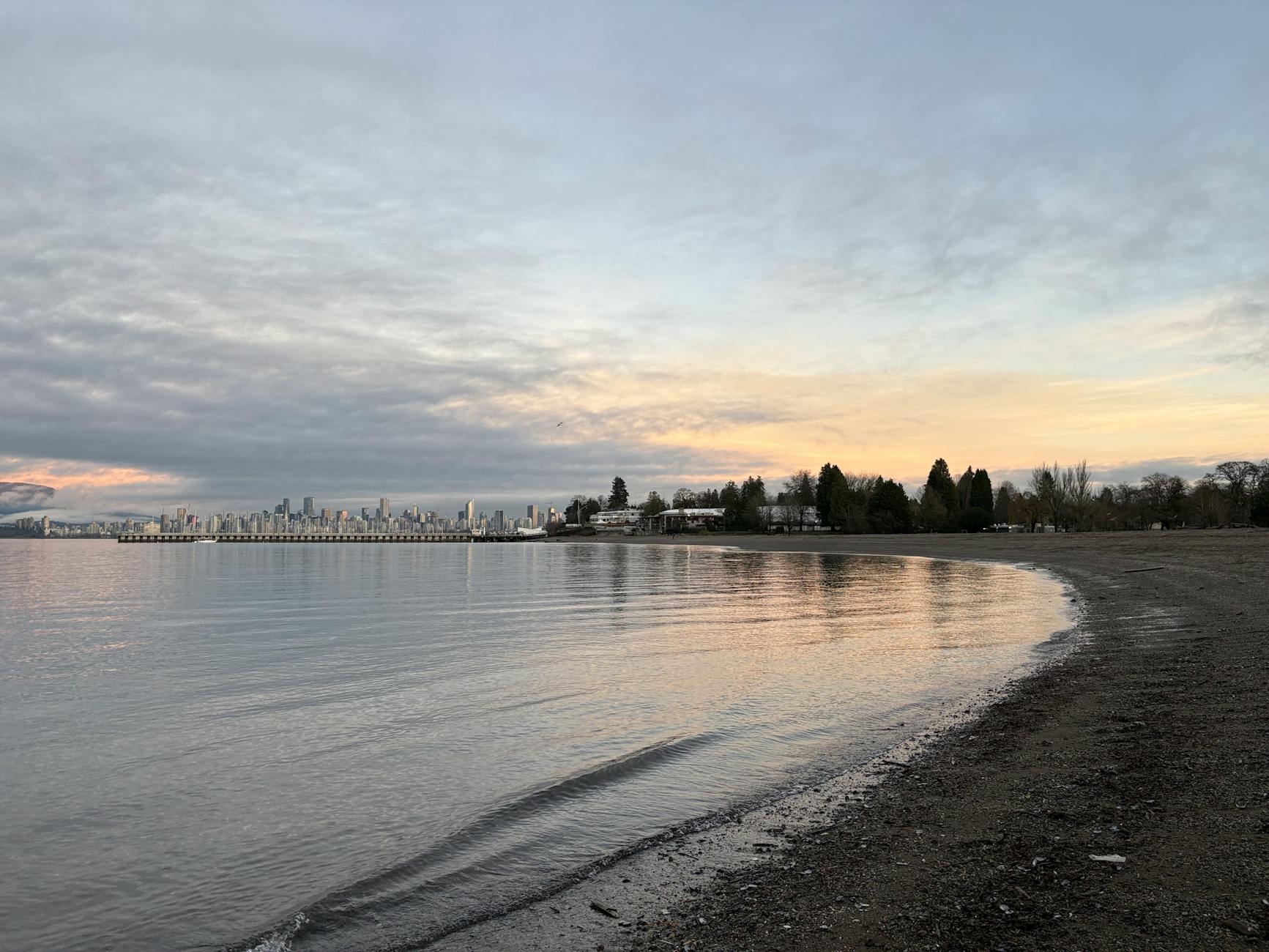
September is the secret-best month — September weather is essentially August’s, minus the kids, minus the smoke (often), minus the highest prices. Average high 19°C (66°F), low 11°C (52°F), 53 mm rain across 9 wet days.
What to expect:
- Sunshine hours: 220 (still abundant)
- Sea temperatures: 16°C (61°F) — last comfortable swim window
- Vancouver International Film Festival: Late September into early October
- Salmon return: Goldstream Provincial Park and Capilano Salmon Hatchery peak runs late September into October
What’s open vs. quiet: Cruise season winds down by late September. Whistler bike park closes early October. Patios open through end of month most years. Restaurant reservations easier.
Best for: Couples without school-age kids, photographers chasing softer light, value-seekers wanting summer conditions at fall prices, food and wine travelers (harvest season in BC wine country).
October in Vancouver
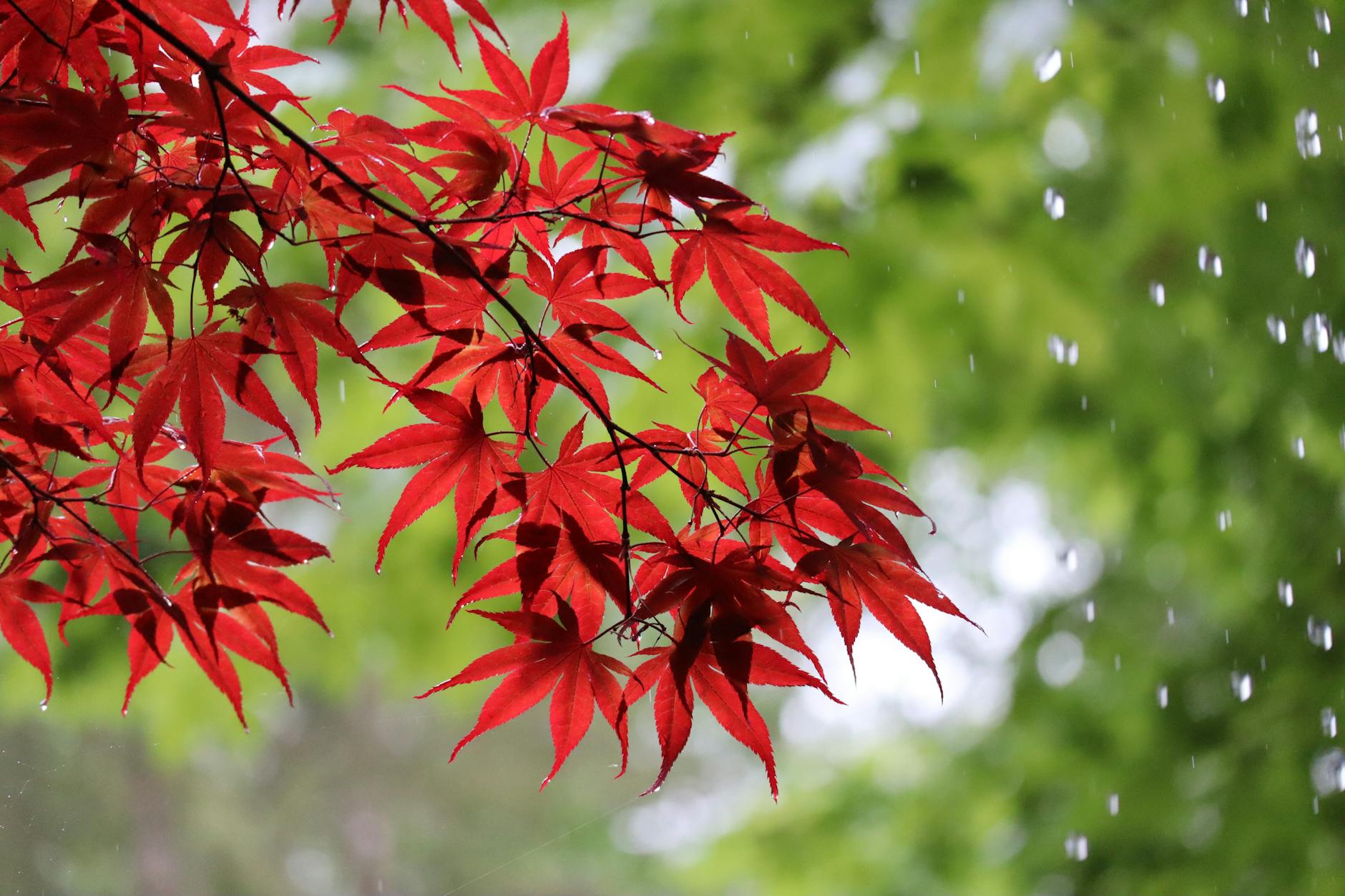
October is when the rain returns — the average monthly rainfall jumps from September’s 53 mm to October’s 121 mm, and from 9 wet days to 16. Average high 14°C (57°F), low 7°C (45°F).
What to expect:
- Daylight saving time ends: First Sunday of November (clocks back 1 hour)
- Fall foliage peak: Mid- to late October at Stanley Park, Queen Elizabeth Park, VanDusen
- Halloween events: Stanley Park Ghost Train and Fright Nights at PNE
- Storm season begins: Tofino “storm watching” season starts late October
What’s open vs. quiet: Skiing not yet open. Indoor culture in full swing. VIFF concludes early in month. Wine harvest season in Okanagan day trips.
Best for: Foliage chasers, indoor-arts lovers, storm-watchers willing to drive to Vancouver Island, value travelers happy to layer up.
November in Vancouver
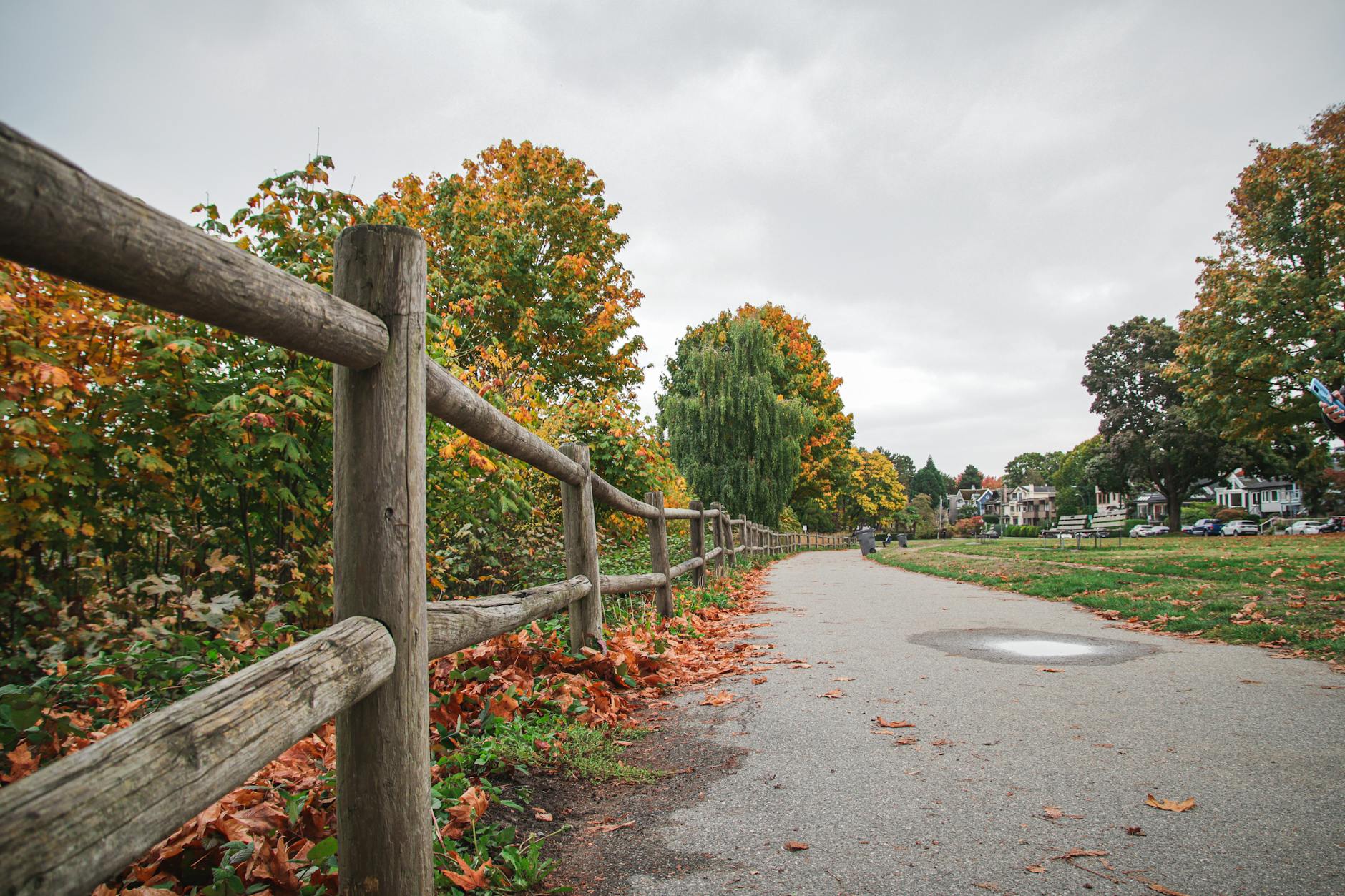
November is the wettest month: 188 mm of rain across 20 wet days — a 67% probability of rain on any given day. Average high 9°C (48°F), low 4°C (39°F). It’s also the cloudiest, with only 60 sunshine hours.
What to expect:
- Atmospheric rivers: Multi-day intense rain events causing flooding in Fraser Valley
- Ski season opens: Whistler typically opens late November; North Shore mountains follow December
- VanDusen Festival of Lights: Opens late November
- Capilano Canyon Lights: Opens late November
What’s open vs. quiet: Holiday markets begin late month. Cruise season finished. Restaurants and culture in full operation. Hotel prices reach annual lows around mid-November.
Best for: Bargain hunters, indoor-museum enthusiasts, ski-season pre-openers willing to drive up the mountain, holiday-light photographers in last week.
December in Vancouver
December is rainy and dim but festive — the rain rate (174 mm) drops slightly from November, but daylight hits its annual minimum. Average high 7°C (45°F), low 2°C (36°F). Snow happens 3-5 days most years; accumulating snow 1-2 days.
What to expect:
- Solstice: December 21 with 8h 11m of daylight (sunset 4:16 PM)
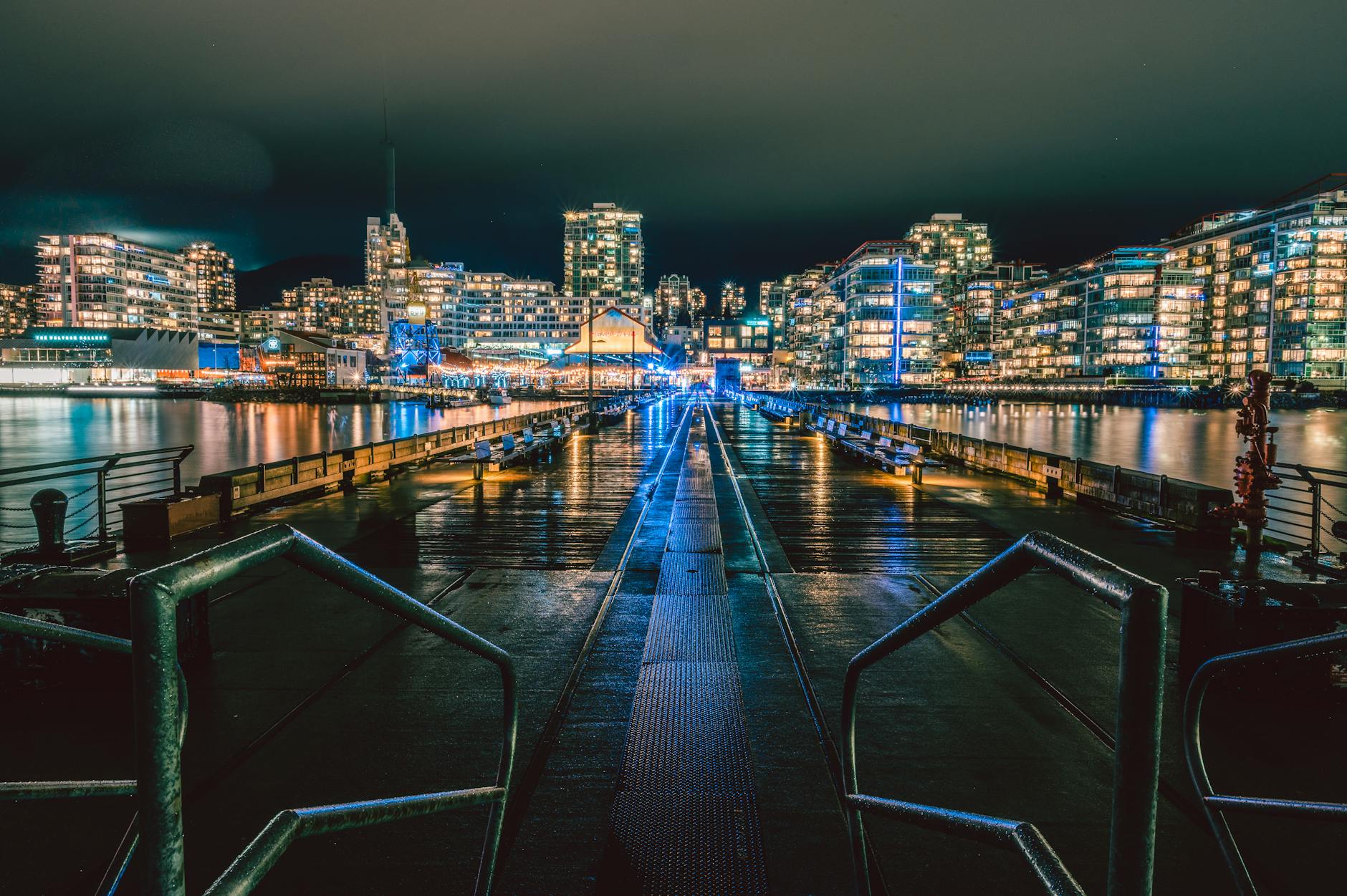
- Holiday events: VanDusen Festival of Lights, Capilano Canyon Lights, Christmas at Hycroft, Stanley Park Christmas Train
- Skiing: All North Shore mountains open by mid-December
- Hotel rates: Spike for Christmas/New Year week, then crash in January
What’s open vs. quiet: Holiday-light attractions citywide. Boxing Day shopping at Pacific Centre. New Year’s Eve fireworks at Canada Place.
Best for: Holiday-light tourists, ski travelers, cozy-cafe explorers, anyone who values festive atmosphere over weather guarantees.

Microclimates Around Metro Vancouver
Metro Vancouver isn’t one weather zone. The Coast Mountains and ocean create dramatic microclimates within 30 minutes of downtown. Knowing these can save (or salvage) a trip.
The wet belt (North Shore, Coquitlam, Whistler corridor): The mountains squeeze 50-80% more rain out of incoming systems. North Vancouver averages 1,800 mm/year — 50% more than downtown’s 1,189 mm. Whistler village averages 1,200 mm with most as snow above 1,500m.
The rain shadow (Vancouver Island east coast, Sunshine Coast, parts of Tsawwassen): The Olympic and Vancouver Island mountains block weather systems. Sidney (BC) averages 880 mm/year — 25% less than Vancouver. Tofino on Vancouver Island’s west coast: 3,300 mm/year (3× Vancouver).
The temperature inversion (Fraser Valley): Cold air pools in the eastern Fraser Valley in winter; Abbotsford and Chilliwack often run 5°C colder than Vancouver during cold snaps and have more accumulating snow.
Practical implication: If forecast looks rainy in Vancouver but you have flexibility, day-trip to Vancouver Island east side or Sunshine Coast for higher dry odds. If snow chase is the goal, head to Coquitlam or Mission. For storm watching: Tofino. For elevation snow: Whistler.
Recent Climate Extremes & Trends
Vancouver’s average climate is reliable, but the last decade has produced repeat extremes worth understanding before you book.
2021 heat dome (June 26–July 1): Vancouver hit 42°C (108°F) — an all-time record by 7°C. The city’s housing stock is largely uncooled (less than 40% of units have AC), and 619 British Columbians died across the event. Modern travel implication: hotels and Airbnbs rated for AC are now a meaningful filter for July–August stays. Confirm AC explicitly before booking.
2021 atmospheric river (November 13–15): Highway 1 east of Vancouver was severed for weeks; flooding cut the city off from the rest of Canada by road. Modern travel implication: November and early December storm windows can disrupt day trips to the Fraser Valley, Whistler, and Vancouver Island. Build buffer days into critical itineraries.
2017–2024 wildfire smoke: Smoke from interior BC and US fires now affects Vancouver during most summers. Air-quality alerts can persist 3–14 days. Modern travel implication: build flexibility into mid-July through mid-September itineraries; have indoor backups (Vancouver Aquarium, Museum of Anthropology, Bill Reid Gallery) ready.
Trend lines: Vancouver’s average temperature has risen ~1.4°C since 1900, and snow days at sea level are decreasing. Whistler’s snow base is increasingly arriving later (mid-December rather than early December) but staying as long, with bigger early-season storms followed by mid-winter rain events.
Choosing the Right Window for Your Trip
The “best month” depends entirely on what you’re optimizing for. Use this decision matrix.
Prioritize sunshine guarantee: Late July to mid-September. Within that, July is the absolute peak; September is best value.
Prioritize cherry blossoms: April 1–14 (Akebono/Yoshino peak). Early March for plum and Whitcomb if you want quieter parks.
Prioritize skiing: Mid-January through early March for guaranteed snow at all elevations. December opens the season; April closes the lower mountains but Whistler can ski into May.
Prioritize lowest prices: Mid-January (excluding Chinese New Year week), early February, mid-November. Hotel rates can drop below $130/night for 4-star downtown properties.
Prioritize festivals and events: July (Honda Celebration of Light, Jazz Festival, Folk Music Festival), late January (Dine Out Vancouver), early April (Cherry Blossom Festival), late September (VIFF), late November (Festival of Lights).
Prioritize wildlife: Bears most active April–October; whales (orca, humpback, minke) most active May–October; salmon runs peak September–October.
Prioritize avoiding crowds + still wanting decent weather: Last week of May through mid-June, OR mid-September through early October. These two shoulder windows are the connoisseur’s pick.

Vancouver Weather FAQs
What is Vancouver’s hottest month?
July and August tie, with average highs of 22°C (72°F). Records have hit 42°C (108°F) during 2021’s heat dome event, but 95th percentile highs are 28-30°C.
What is Vancouver’s coldest month?
January, with average lows of 1°C (34°F) and average highs of 7°C (45°F). Subzero spells happen but rarely persist more than a week.
How many rainy days does Vancouver have per year?
About 168 — but “rainy day” is defined as ≥0.2 mm. Many of these are brief showers, not all-day downpours. The number of days with measurable, persistent rain is closer to 110.
Does it snow in Vancouver?
Yes, but lightly: 38 cm/year on average at sea level, mostly Dec–Feb. Mountains (Grouse, Cypress, Whistler) get 8-10 metres annually.
What is the best month to visit Vancouver weather-wise?
July for guaranteed sunshine, low rain, and warmth. August matches but adds wildfire-smoke risk. September is the value-best month.
When is wildfire smoke worst?
Mid-July through mid-September during BC fire seasons. 2017, 2018, 2021, 2022, 2023, and 2024 each had multi-week episodes affecting Vancouver air quality.
Related reading: Pair this with our Best Time to Visit Vancouver pillar, our Vancouver packing guide, and seasonal deep-dives — Spring, Summer, Fall, and Winter.


